
Rhagymadrodd
The Shall 11.4-inch Basin Wrench is a specialized hand tool designed for installing and removing faucet nuts, supply lines, and drain pipes in confined and hard-to-reach areas, particularly under sinks and behind toilets. Its unique design, featuring spring-loaded jaws and a 180-degree pivoting head, allows for efficient operation where traditional wrenches cannot be used. Constructed from high-carbon steel with a polished chrome finish, this wrench offers durability and corrosion resistance for long-lasting performance.
Cynnyrch Drosview a Nodweddion
The Shall Basin Wrench is engineered with several key features to simplify plumbing tasks:
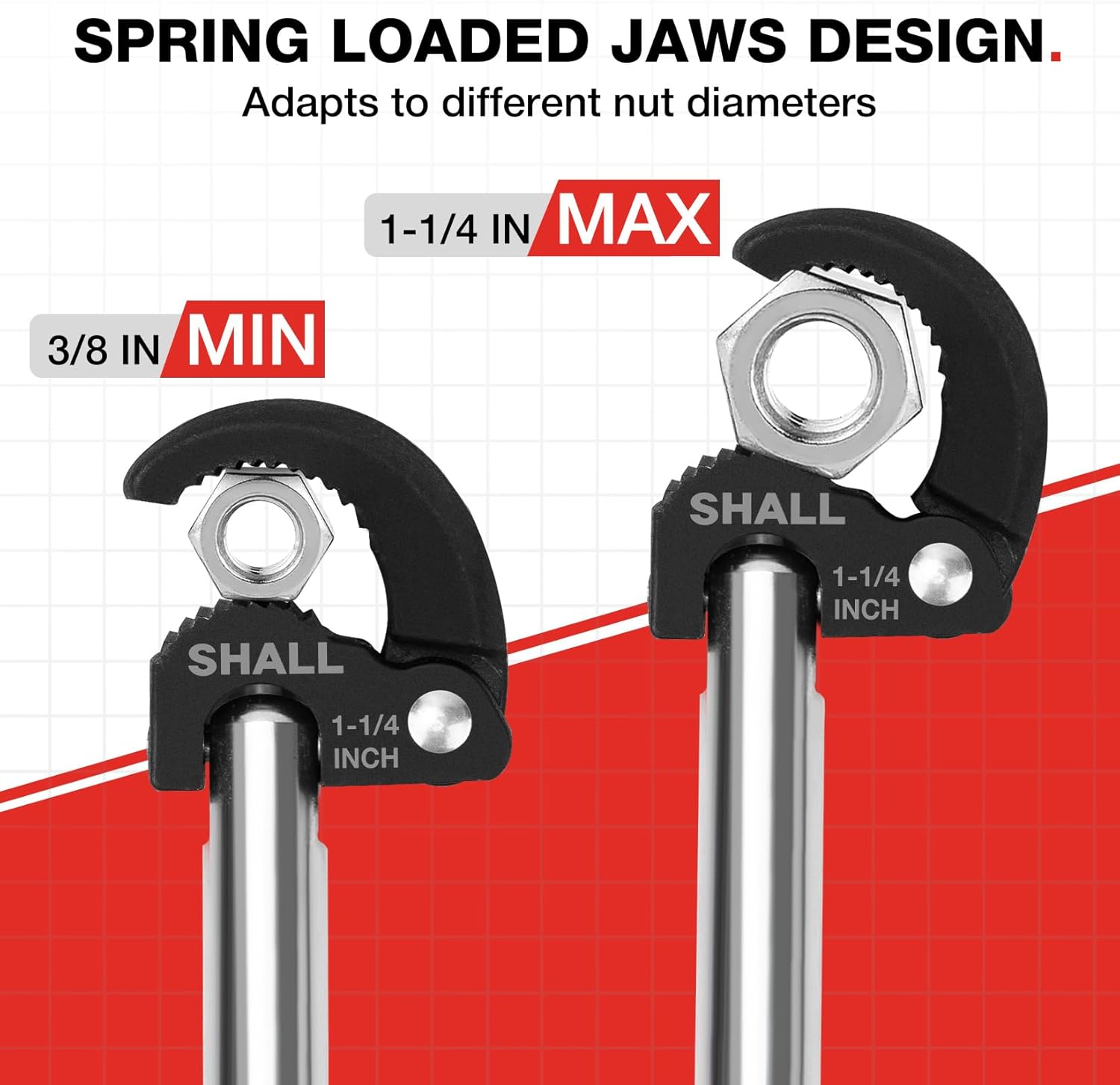
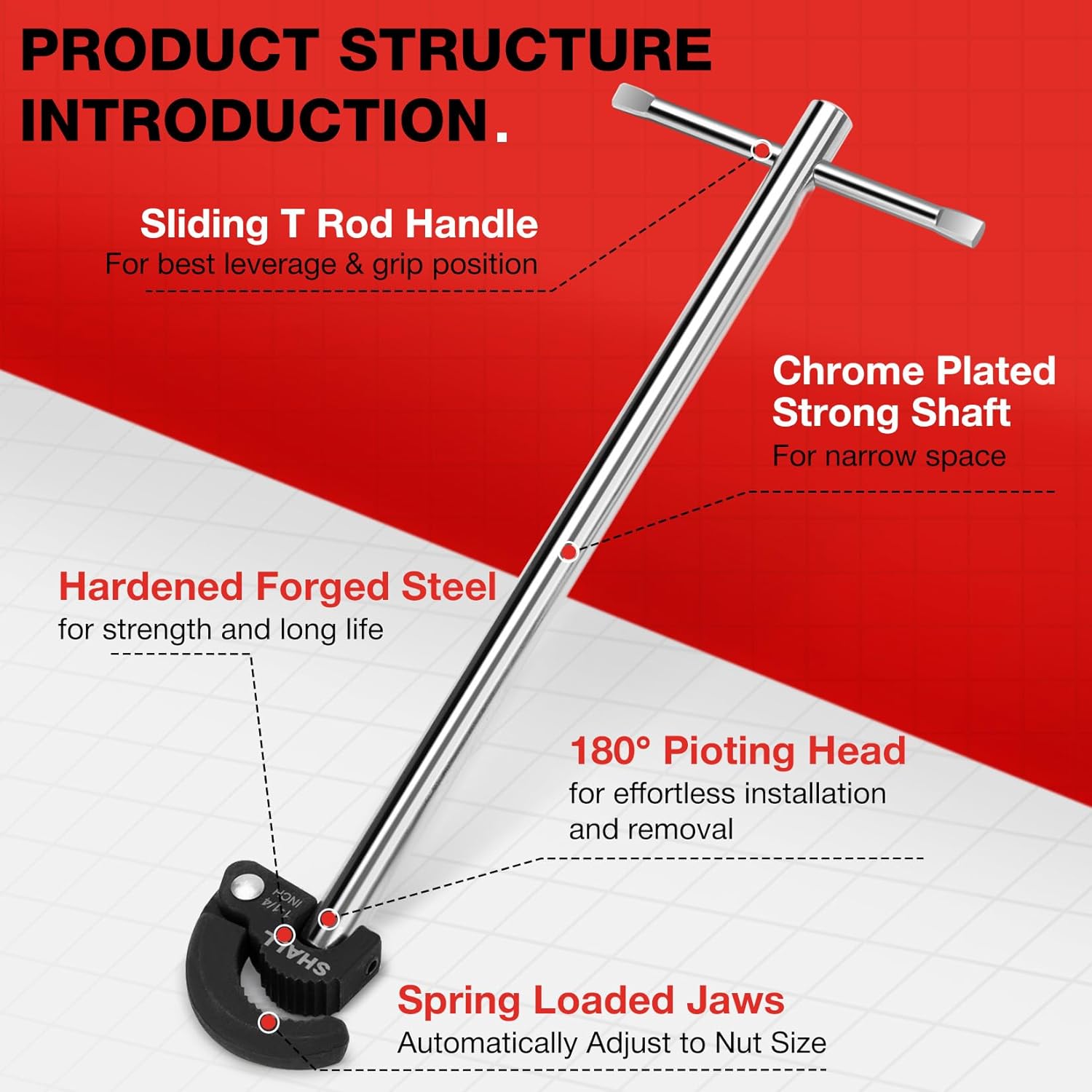
- Spring-Loaded Jaws: Automatically adjust to nut diameters ranging from 3/8 inches to 1-1/4 inches, providing a secure grip on various faucet nuts, supply line fittings, and drain pipes. This design eliminates the need for manual jaw adjustment, enhancing efficiency.
- 180-Degree Pivoting Head: The wrench head can rotate 180 degrees and lock into any position, enabling access to nuts in awkward angles and vertical spaces that are inaccessible with standard tools.
- 11-inch Slim Shaft: The extended, slender shaft allows the wrench to reach deep into tight spaces behind toilets, under vanities, and around cramped plumbing installations, preventing scraped knuckles and providing necessary clearance.
- High-Carbon Steel Construction: Forged from high-carbon steel, the wrench offers superior strength and durability, providing up to two times the torque of comparable tools. The fully polished chrome finish resists corrosion, ensuring a long service life.
- Ergonomic T-Handle: The sliding T-rod handle provides optimal leverage and grip position, reducing wrist fatigue during prolonged use and allowing for powerful tightening or loosening of stubborn fittings.
- Ategolion wedi'u cynnwys: The wrench comes with a pair of black rubber gloves for enhanced grip and protection against oils and water, and a roll of thread seal tape (PTFE) for sealing leaks during plumbing work.



Gosod
The Shall Basin Wrench requires minimal setup and is ready for immediate use upon unboxing. Ensure all components are present and in good condition.
- Archwilio Cydrannau: Verify that the wrench, black rubber gloves, and thread seal tape are included and undamaged.
- Familiarize with Operation: Before use, gently operate the spring-loaded jaws and pivot the head to understand its range of motion and automatic adjustment mechanism.
Cyfarwyddiadau Gweithredu
Follow these steps for effective use of your Shall Basin Wrench:
- Paratowch yr Ardal Waith: Ensure adequate lighting and clear any obstructions around the nut or fitting you intend to work on. Consider wearing the included rubber gloves for better grip and protection.
- Position the Wrench:
- Extend the wrench shaft into the tight space, guiding the jaws towards the nut.
- Utilize the 180-degree pivoting head to angle the jaws for optimal access. The head will lock into position once aligned.
- Engage the Jaws:
- Place the spring-loaded jaws around the nut. The jaws will automatically adjust and grip the nut firmly within their 3/8" to 1-1/4" capacity.
- Ensure the jaws are fully seated on the nut to prevent slipping and damage.
- Gwneud cais am dorc:
- Grasp the T-handle firmly. For maximum leverage, slide the T-rod to one side to create a longer handle.
- Rotate the wrench in the desired direction (clockwise for tightening, counter-clockwise for loosening). Apply steady, firm pressure.
- Use Thread Seal Tape (if needed): For new installations or re-sealing connections, wrap the included PTFE thread seal tape clockwise around the threads of the pipe or fitting before tightening with the wrench.


Cynnal a chadw
Proper maintenance will ensure the longevity and optimal performance of your Shall Basin Wrench:
- Glanhau: After each use, wipe down the wrench with a clean, dry cloth to remove any dirt, grease, or moisture. For stubborn grime, a mild detergent and water can be used, followed by thorough drying.
- Iro: Periodically apply a light coat of machine oil to the pivoting head and jaw mechanism to ensure smooth operation and prevent rust, especially if stored in humid conditions.
- Storio: Store the wrench in a dry place, away from direct sunlight and extreme temperatures. A tool bag or drawer is ideal to protect it from damage and corrosion.
- Arolygiad: Regularly inspect the jaws for wear or damage. While the hardened steel is durable, excessive force or improper use can cause wear over time.
Datrys problemau
Dyma rai materion cyffredin a'u hatebion:
| Problem | Achos Posibl | Ateb |
|---|---|---|
| Wrench slips on the nut. | Jaws not fully engaged; nut is rounded or stripped; jaws are dirty/greasy. | Ensure jaws fully grip the nut. Clean jaws if greasy. If the nut is severely damaged, alternative methods or nut replacement may be required. |
| Cannot reach the nut. | Incorrect angle of the pivoting head; obstruction. | Adjust the 180-degree pivoting head to a different angle. Clear any movable obstructions. |
| Nut is too tight to loosen. | Insufficient leverage; nut is seized. | Ensure the T-handle is extended for maximum leverage. Apply steady, increasing force. For seized nuts, consider using penetrating oil if appropriate for the material. |
| Jaws do not open/close smoothly. | Accumulated dirt or lack of lubrication. | Clean the jaw mechanism thoroughly and apply a light lubricant. |
Manylebau
| Gwneuthurwr | SHALL TOOLS |
| Rhif Model | SH229002AE |
| Pwysau Eitem | 530 gram |
| Dimensiynau Cynnyrch | 31.9 x 12.6 x 2.7 cm (12.56 x 4.96 x 1.06 modfedd) |
| Deunydd | Alloy Steel (legierter Stahl) |
| Gorffen | Chrome caboledig |
| Lliw | Chrome |
| Jaw Capacity | 3/8" to 1-1/4" |
| Cydrannau wedi'u Cynnwys | Basin Wrench, Black Rubber Gloves, Thread Seal Tape |
Gwarant a Chefnogaeth
For specific warranty information regarding your Shall Basin Wrench, please refer to the documentation provided with your purchase or contact the manufacturer directly. Shall is committed to providing quality tools and customer satisfaction.
For technical support or inquiries, please visit the official Shall websafle neu cysylltwch â'u hadran gwasanaeth cwsmeriaid. Gellir dod o hyd i fanylion cyswllt fel arfer ar becynnu'r cynnyrch neu ar wefan y gwneuthurwr websafle.