
1. Rhagymadrodd
This manual provides instructions for the safe and effective use of the VEVOR Live Animal Cage Trap, Model LB-28A. This trap is designed for humane capture of various small to medium-sized animals such as rabbits, stray cats, squirrels, raccoons, groundhogs, and opossums. Please read all instructions carefully before use to ensure proper operation and animal safety.

Image 1.1: The VEVOR Live Animal Cage Trap with a groundhog captured inside, demonstrating its intended use.
Nodweddion Allweddol:
- Cais Eang: Suitable for various wildlife including cats, raccoons, rabbits, groundhogs, armadillos, and opossums.
- Humanized Designs: Features an L-shaped lever to prevent harm, dense mesh to prevent escapes, and smooth wire edges for animal safety.
- Cadarn a Gwydn: Constructed with thickened galvanized iron wires for corrosion resistance and durability in all weather conditions.
- Simple and User-friendly: Comes pre-assembled for quick setup.
- Cludadwy a Hawdd i'w Storio: Equipped with an extended handle for safe transport and a collapsible design for convenient storage.

Image 1.2: An illustration highlighting the multi-functional nature of the trap, showing its dimensions (31x10x12 inches) and various target species like raccoons, armadillos, groundhogs, rabbits, cats, and opossums.
2. Cyfarwyddiadau Gosod
The VEVOR Live Animal Cage Trap is designed for quick and easy deployment. Follow these steps to set up your trap:
- Datblygwch y Cawell: Carefully unfold the collapsed cage structure. Ensure all panels are properly aligned.
- Secure the Rear Door: Lock the rear door into place. This forms the back wall of the trap.
- Connect L-Shaped Hooks: Attach the L-shaped hooks to the trigger mechanism. This prepares the trap door to be set.

Image 2.1: A visual guide demonstrating the simple 3-step setup process: opening the front door, locking the rear door, and connecting the L-shaped hooks to activate the trap mechanism.
Once assembled, the trap is ready for baiting and placement.
3. Cyfarwyddiadau Gweithredu
3.1 Baiting the Trap
Select appropriate bait for the target animal. Place the bait at the rear of the trap, behind the trigger plate, to encourage the animal to fully enter the trap.
- For Raccoons, Opossums, Groundhogs: Fruits, vegetables, sweet corn, or commercial baits.
- For Cats: Canned fish (sardines, tuna), cat food, or chicken.
- For Rabbits, Squirrels: Carrots, apples, nuts, seeds, or leafy greens.
3.2 Setting the Trap
Carefully lift the trap door and secure it in the open position using the L-shaped lever mechanism. Ensure the trigger plate is level and sensitive enough to activate when an animal steps on it.

Image 3.1: Details of the trap's user-friendly design, including the external trigger mechanism designed not to harm animals, smooth edges for safety, and an extended handle for easy carrying.
3.3 Lleoliad
Place the trap on a flat, stable surface in an area where animal activity has been observed. For best results, position the trap along animal travel paths or near their dens. Check the trap frequently, at least once every few hours, to minimize stress to captured animals.

Image 3.2: A raccoon safely captured within the VEVOR trap, situated in a natural outdoor setting, illustrating proper placement.
3.4 Rhyddhadasing Captured Animals
Approach the trap calmly. Use the extended handle to transport the trap to a suitable release location, away from residential areas and in accordance with local wildlife regulations. Open the trap door carefully to allow the animal to exit on its own. Avoid direct contact with the animal.
4. cynnal
Proper maintenance ensures the longevity and effectiveness of your VEVOR Live Animal Cage Trap.
4.1 Glanhau
After each use, especially after capturing an animal, clean the trap thoroughly. Use a stiff brush and mild detergent with water. Rinse completely and allow to air dry. This removes odors that might deter future captures and helps prevent the spread of disease.
4.2 Storio
The trap features a collapsible design for easy storage. Fold the trap flat when not in use to save space and protect it from the elements. Store in a dry place to prevent rust and maintain its galvanized coating.

Image 4.1: The trap shown in its folded configuration, highlighting its portability and ease of storage, ideal for transport in a vehicle trunk.
4.3 Durability Check
Regularly inspect the trap for any signs of wear, damage, or corrosion. The trap is constructed from thickened galvanized iron wire, providing resistance against rust and impacts. Address any issues promptly to ensure the trap remains safe and functional.
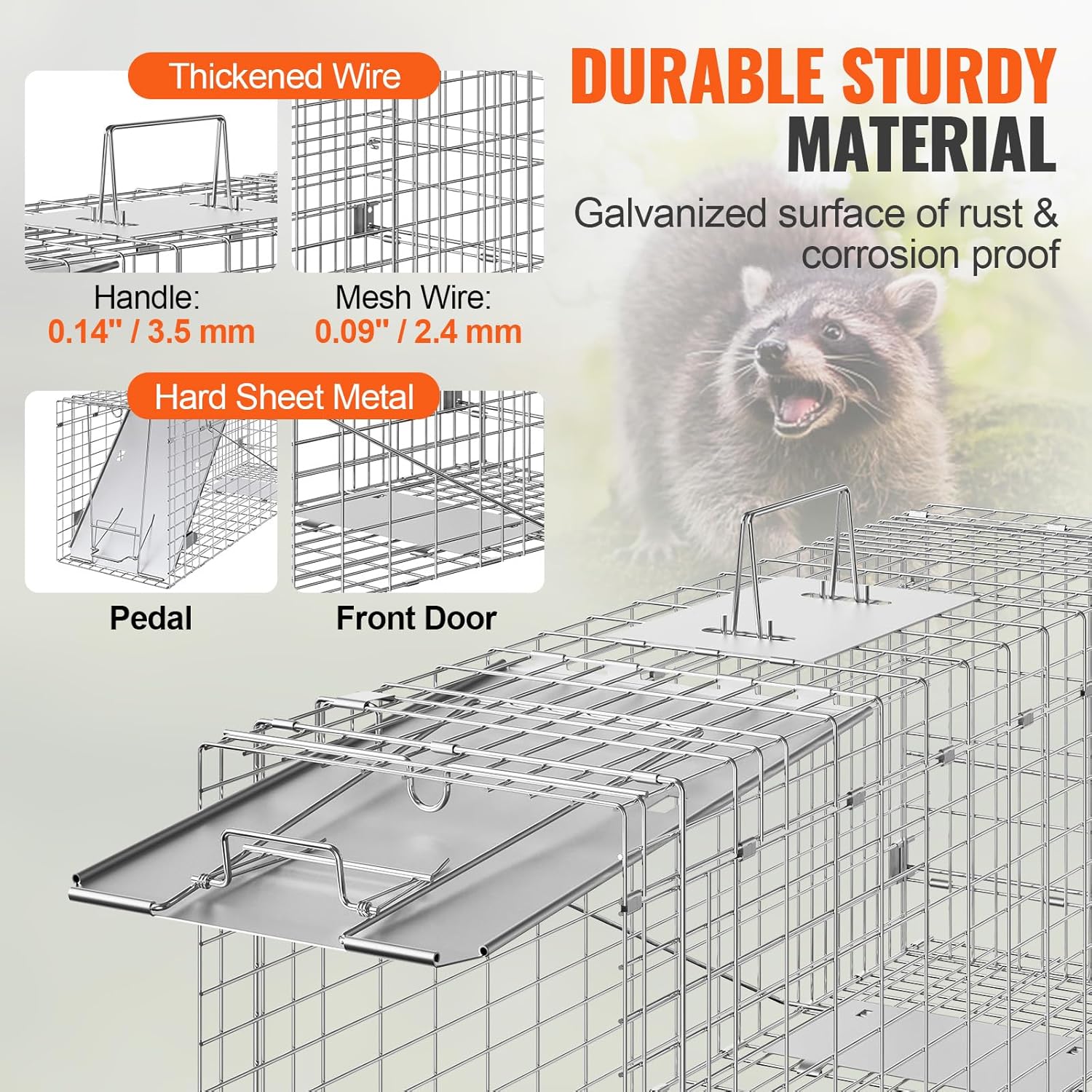
Delwedd 4.2: Manylion view of the trap's durable construction, emphasizing the thickened wire (handle 0.14"/3.5mm, mesh wire 0.09"/2.4mm) and hard sheet metal components, all galvanized for rust and corrosion proofing.
5. Datrys Problemau
- Trap Not Triggering:
Ensure the L-shaped hooks are correctly engaged with the trap door mechanism. Check that the trigger plate is free of obstructions and sensitive enough to respond to light pressure. Adjust bait placement to encourage the animal to step on the plate. - Animal Escapes:
Verify that all cage panels are securely locked into place and that the rear door is properly fastened. Inspect the mesh for any gaps or damage that an animal could exploit. Ensure the trap door closes completely and latches securely upon triggering. - Rhwd neu Gyrydiad:
While the trap is galvanized for corrosion resistance, prolonged exposure to moisture can still cause issues. Ensure the trap is cleaned and dried thoroughly after each use and stored in a dry environment. Minor rust spots can often be treated with a wire brush and rust-inhibiting paint.
6. manylebau
Detailed specifications for the VEVOR Live Animal Cage Trap, Model LB-28A:
| Nodwedd | Manyleb |
|---|---|
| Rhif Model | LB-28A |
| Dimensiynau Cynnyrch | 31 x 10 x 12 modfedd (785 x 254 x 305 mm) |
| Pwysau Net | 8.7 pwys / 3.95 kg |
| Prif Ddeunydd | Galvanized Iron Wire |
| Mesh Wire Material | Galvanized Iron Wire |
| Mesh Wire Diameter | 0.09 modfedd / 2.4 mm |
| Trin Deunydd | Galvanized Iron Wire |
| Trin Diamedr | 0.14 modfedd / 3.5 mm |
| Math o Drws | Sheet Metal Door |
| Deunydd Pedal | Galvanized Sheet Metal |
| Plygadwy | Oes |
| Trin Math | Allanol |

Delwedd 6.1: Trosolwg cynhwysfawrview of the trap's specifications, including dimensions, materials, and key features, with the model number LB-28A clearly indicated.
7. Gwarant a Chefnogaeth
VEVOR products are designed for durability and performance. For any questions regarding the operation, maintenance, or troubleshooting of your VEVOR Live Animal Cage Trap, please contact VEVOR customer support. Refer to your purchase documentation for specific warranty details and contact information.
You can often find support resources and contact details on the official VEVOR websafle: www.vevor.com