
Rhagymadrodd
This concise guide is designed to enable the reader to learn how to program in assembly language as quickly as possible. Through a hands-on programming approach, readers will also learn about the architecture of the Intel processor, and the relationship between high-level and low-level languages.
This updated second edition has been expanded with additional exercises, and enhanced with new material on floating-point numbers and 64-bit processing.
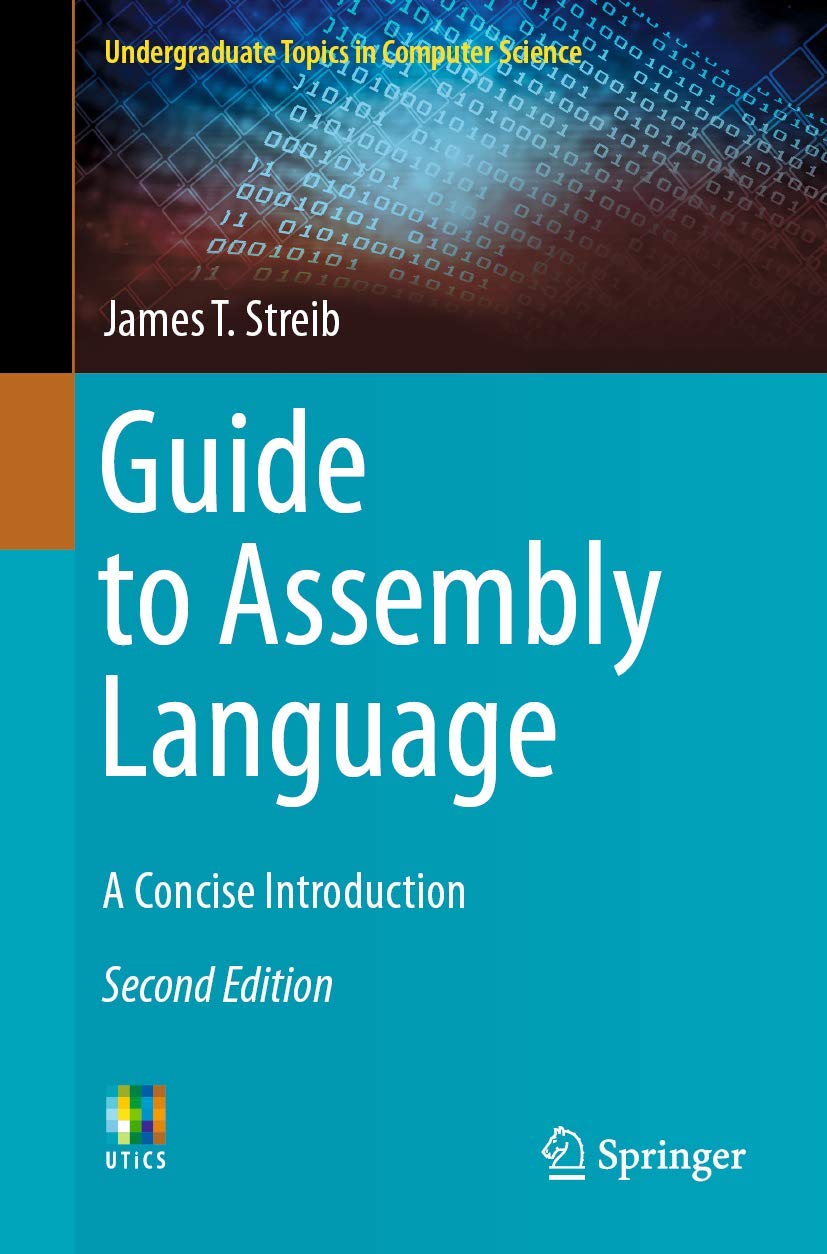
Image: Front cover of the book, 'Guide to Assembly Language: A Concise Introduction'.
Setup and Prerequisites
To effectively utilize this guide, ensure you have access to the book in either paperback or eTextbook format. The content is structured for self-study and practical application.
Required Prior Knowledge:
The presentation assumes prior knowledge of the basics of programming in a high-level language such as C, C++, or Java. Familiarity with fundamental programming concepts will aid in understanding the transition to assembly language.
Operating Instructions (How to Use This Guide)
This guide employs a hands-on programming approach to facilitate learning. It is recommended to actively engage with the material by attempting the programming examples and exercises provided.
Key Learning Areas:
- Simplified Register Usage: Guidance on efficient use of processor registers.
- Simplified Input/Output: Utilizing C-like statements for I/O operations.
- High-Level Control Structures: Understanding and implementing control structures.
- Low-Level Control Structures: Implementation of control structures without high-level constructs, often with related C program code.
- Rhaglen Examples: Concepts are illustrated with one or more complete programs.
- Review Summaries and Exercises: Each chapter includes summaries and a variety of exercises, from short-answer questions to programming assignments.
- Instruction Set Coverage: Includes selection and iteration structures, logic, shift, arithmetic shift, rotate, and stack instructions.
- Advanced Topics: Procedures, macros, arrays, strings, floating-point instructions, and 64-bit processing.
- Machine Language: Examination from a discovery perspective, introducing computer organization principles.
Work through chapters sequentially, paying close attention to the provided code examples and attempting all exercises to solidify understanding.
Cynnal a Chadw a Gofal
To ensure the longevity and readability of your physical copy of the guide, follow these recommendations:
- Storio: Store the book in a cool, dry place away from direct sunlight and excessive humidity to prevent paper degradation and cover damage.
- Trin: Handle with clean hands to avoid transferring oils and dirt to the pages. Avoid folding pages or bending the spine excessively.
- Diogelu: Consider using bookmarks instead of dog-earing pages. If transporting, place in a protective bag or sleeve.
For eTextbook versions, ensure your reading device is kept updated and backed up to prevent loss of access or data.
Troubleshooting Common Learning Challenges
Learning assembly language can present unique challenges. Here are some strategies to overcome common difficulties:
- Difficulty Understanding Concepts: Re-read the relevant sections carefully. Break down complex topics into smaller parts. Consult the review summaries at the end of each chapter.
- Gwallau Rhaglennu: When encountering issues with code, systematically debug your programs. Pay close attention to error messages from your assembler or debugger. Compare your code with examples in the book.
- Struggling with Exercises: If an exercise proves challenging, review the preceding examples and theoretical explanations. Try to solve a simpler version of the problem first.
- Lack of Progress: Take short breaks when feeling overwhelmed. Discuss difficult concepts with peers or seek clarification from instructors or online programming communities.
Remember that consistent practice and patience are key to mastering assembly language.
Manylebau
| Cyhoeddwr | Springer |
| Dyddiad Cyhoeddi | Ionawr 24, 2020 |
| Argraffiad | Second Edition 2020 |
| Iaith | Saesneg |
| Hyd Argraffu | 360 tudalen |
| ISBN-10 | 3030356388 |
| ISBN-13 | 978-3030356385 |
| Pwysau Eitem | 1.1 pwys |
| Dimensiynau | 6.1 x 0.82 x 9.25 modfedd |
| Cyfres | Undergraduate Topics in Computer Science |
Gwybodaeth Gwarant
As a published textbook, this product does not typically come with a traditional manufacturer's warranty for functionality or performance. Any issues related to printing defects or binding quality should be directed to the retailer or publisher within a reasonable timeframe after purchase.
For digital versions (eTextbooks), access is generally governed by the terms of service of the platform through which it was purchased.
Cefnogaeth ac Adnoddau
For further assistance or inquiries regarding the content of this guide, consider the following resources:
- Awdur: James T. Streib. While direct support from the author may not be available, academic institutions often provide resources for students studying such topics.
- Cyhoeddwr: Springer. For general inquiries about the publication, you may visit the official Springer websafle neu cysylltwch â'u gwasanaeth cwsmeriaid.
- Academic Communities: Online forums, university computer science departments, and study groups can be valuable resources for discussing concepts and troubleshooting programming challenges related to assembly language.